Holidays
Thanksgiving and Your Teeth: 9 Tiny Moves That Help
• • 5 min read
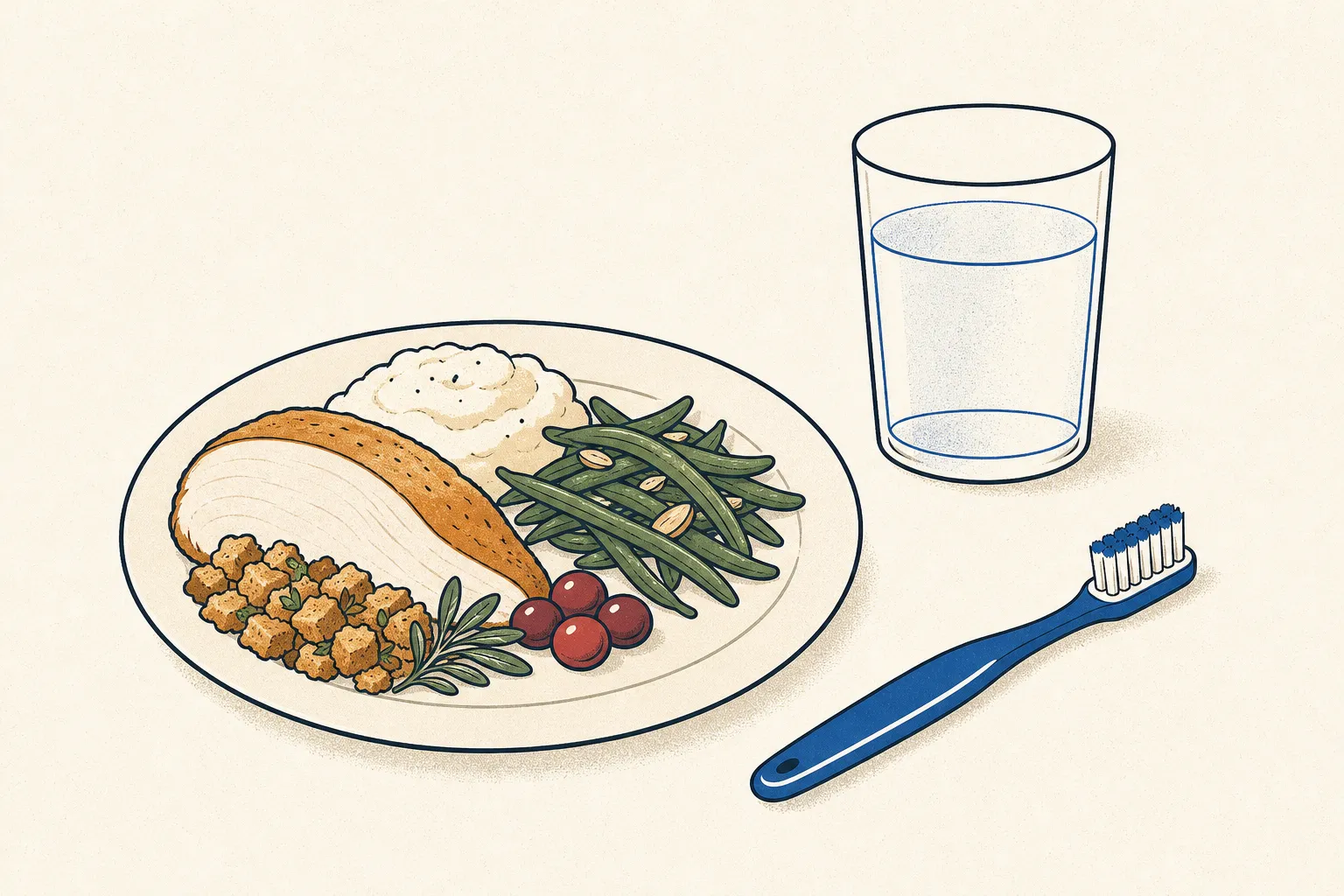
The turkey is not the villain; the real game is timing, water, smart chewing, and a solid bedtime reset.
Your teeth can absolutely handle Thanksgiving without putting pie on the forbidden list. The smartest plan is simple: eat in clear rounds, sip water, avoid chewing anything suspiciously hard, and give your mouth a proper bedtime cleanup.
One plate of turkey, potatoes, and pie is not automatically a dental disaster. The bigger issue is how often your teeth meet sugar, starch, and acid throughout the day.
Oral bacteria use sugars and cooked starches, including bread, crackers, and potatoes, to produce acids. Those acids can weaken enamel, which is the hard outer shell of each tooth. Saliva helps neutralize the acids, but constant grazing gives your mouth fewer quiet periods to recover.
In other words, Thanksgiving dinner is not the villain. The parade of appetizers, leftovers, desserts, and one last forkful while standing over the sink deserves more attention.
Enjoy the cheese board, dip, or warm rolls, then let the snack round finish. A meal-sized eating window is generally friendlier to teeth than taking a bite every few minutes for several hours.
You do not need a stopwatch. Simply clear your plate, step away from the food table, and let your mouth have a break before the main meal.
Water helps rinse away loose food and keeps your mouth comfortable while saliva does its job. Take a few sips during dinner and after dessert, especially if you are also having wine, cider, soda, or another acidic drink.
This does not cancel out sugar or replace brushing. It is just an easy assist, and unlike opening a second bottle of sparkling cider, it requires no family vote.
Cranberry sauce, sweet potatoes with marshmallows, pie, wine, and cider can all be part of the celebration. Having them with a meal is usually kinder to your teeth than returning to them repeatedly throughout the afternoon and evening.
A meal encourages more saliva flow, and grouping exposures gives your mouth longer breaks afterward. Pick the dessert you genuinely want, enjoy it, and resist the tiny slices that somehow keep happening every 20 minutes.
Turkey, cooked vegetables, cheese, and other meal foods are generally easier on teeth than a day built around sticky sweets and crackers. Firm, comfortable chewing also encourages saliva.
That does not make raw carrots a toothbrush or cheese a cavity shield. Food cannot clean your teeth completely. Think of a balanced plate as useful support, not magical dental armor.
Acidic drinks can temporarily soften the surface of enamel. Rather than brushing the second you finish wine, cider, or soda, rinse or sip with water and give your mouth about 30 minutes before brushing.
When you do brush, use a soft toothbrush and fluoride toothpaste. Fluoride is a mineral that helps strengthen enamel and make it more resistant to acid. Gentle, thorough brushing beats an aggressive holiday scrub.
Teeth are excellent at chewing food. They are terrible nutcrackers, ice crushers, bottle openers, and package scissors.
Turkey bones, unpopped kernels, nutshells, and ice can place sudden pressure on a tooth, filling, veneer, or crown. Check each bite before chewing down, use the correct kitchen tool, and leave dramatic package opening to someone with actual scissors.
Crowns and fillings are designed for normal eating, but very sticky or hard foods can still create trouble. If you already know a restoration feels loose, uncomfortable, or different when you bite, avoid testing it against caramel, hard nuts, or crusty bread and arrange a dental evaluation.
If a crown becomes damaged, the right next step depends on an exam. Dental Spot offers a range of family and restorative services, and when a new crown is appropriate, our same-day crown visit can include scanning, designing, milling, and seating the crown in one appointment. Suitability varies by tooth and situation.
Before bed, brush for two minutes with fluoride toothpaste and clean between your teeth with floss or another dentist-recommended tool. Turkey fibers, bread, and other foods can settle between teeth where a toothbrush may not reach.
If something feels stuck, use floss gently. Do not dig at it with a fork, pin, or other sharp object. Sugar-free gum may also encourage saliva after a meal if chewing gum is comfortable and appropriate for you, but it does not replace brushing and cleaning between teeth.
A brief bit of sensitivity after a cold drink does not always mean something serious. Pain that persists, worsens, interrupts sleep, or appears when you bite deserves a dental evaluation. The same is true for a cracked tooth, a loose crown, or swelling around a tooth or the face.
For a knocked-out tooth, severe swelling, or uncontrolled bleeding, seek urgent dental or emergency care right away. Do not wait for leftovers to be packed or the holiday weekend to end. A dentist can assess the cause and explain the options that fit your situation.
Need a post feast check, help with a troublesome tooth, or a fresh start before the next holiday? Book a visit with Dental Spot in Farmington Hills on Monday, Wednesday, or Friday. Our Lathrup Village office is opening soon. Dr. Nahla Wadie and the team will keep it friendly, clear, and judgment free. Most PPO plans are accepted.
This article is for general education and is not dental or medical advice. For personal concerns, see a dentist.