
Myth Busting
Nice try, mouthwash: the flossing loophole is a myth
• • 5 min read
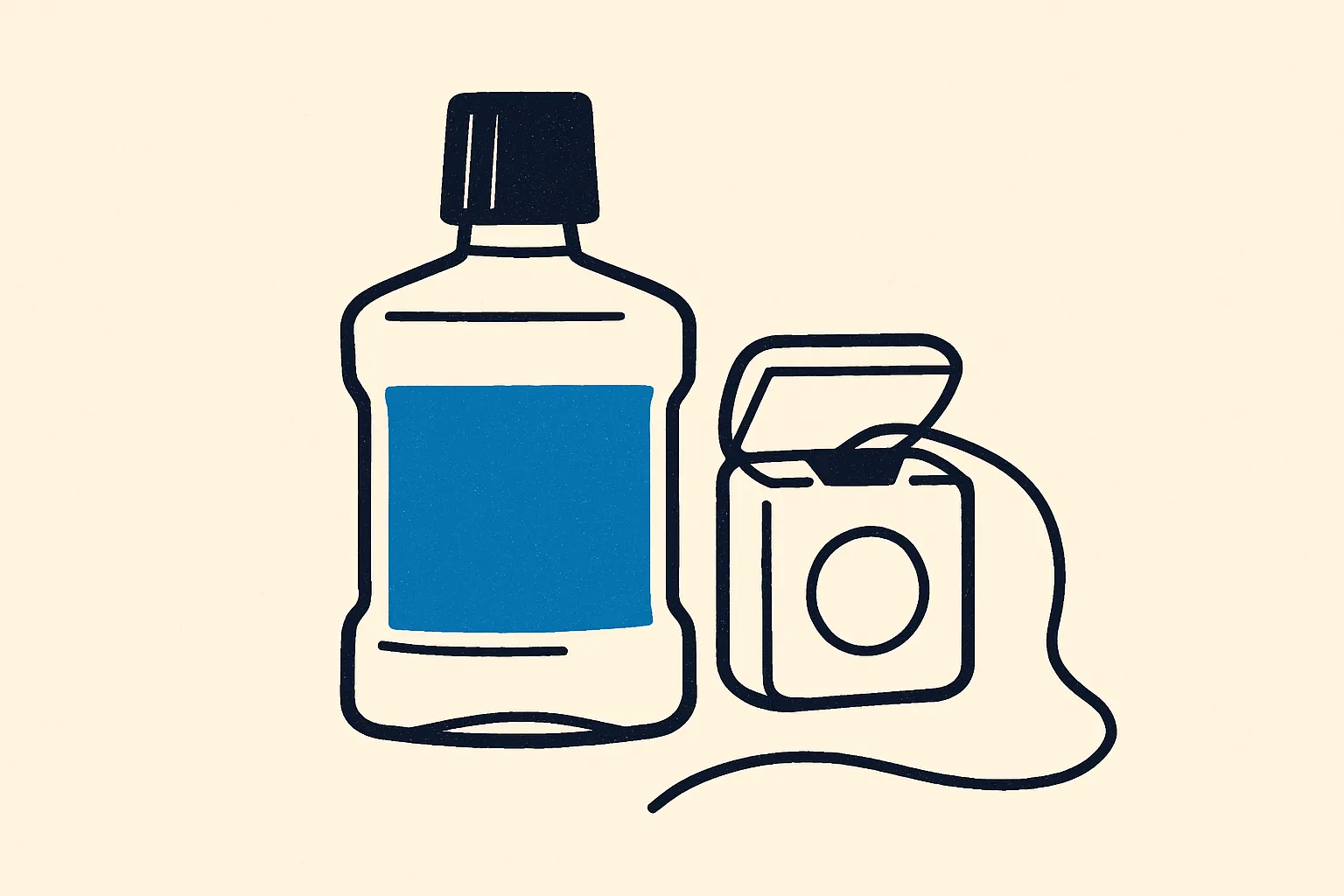
Mouthwash is a helpful teammate, but it cannot do the tiny scrubbing job your teeth need between them.
Short answer: yes, you still need to clean between your teeth. Mouthwash can be useful, but it cannot reliably lift the sticky plaque that floss or another between-teeth cleaner physically removes. Think of rinse as a helpful teammate, not the substitute who can play every position.
Mouthwash is a liquid, so it can flow around your mouth and into some small spaces. That sounds like it should replace floss, right? Sadly, plaque is clingier than that.
Plaque is a sticky film of bacteria that constantly forms on teeth. Dentists may also call it biofilm, which simply means a community of germs attached to a surface.
Because plaque sticks, removing it usually requires physical disruption. Your toothbrush handles the front, back, and chewing surfaces of your teeth. Floss, interdental brushes, and water flossers help clean the narrow areas where neighboring teeth meet.
Mouthwash may affect bacteria, strengthen enamel, or freshen breath, depending on its ingredients. It does not reliably wipe the tooth surface clean. It is a little like soaking a plate without ever using a sponge. The water helps, but the stuck-on bits may remain.
Not every mouthwash has the same job. Some are mostly cosmetic, while others contain active ingredients intended for a specific oral health benefit.
Those benefits can be valuable, but none turns mouthwash into liquid floss. A rinse that helps reduce bacteria still does not remove every layer of plaque or trapped debris between teeth.
Look for an active ingredient and a clear purpose on the label. Follow the product directions, since rinses vary in strength, recommended timing, and age guidance. Children who cannot reliably spit should not use mouthwash unless a dentist or physician recommends it.
Here is the good news for anyone who has ever fought with a long piece of floss and lost: the real goal is cleaning between your teeth. Traditional string floss is one option, not a personality test.
Depending on the size of the spaces, dental work, dexterity, and personal preference, useful tools may include:
Each tool has strengths and limitations. A dentist or hygienist can show you which option fits your mouth and how to use it without sawing at the gums. The best tool is usually the one that reaches the needed areas and becomes part of your actual routine, not the one living unopened in a bathroom drawer.
A solid basic routine is pleasantly unglamorous:
The exact order matters less than doing each job consistently and effectively. If you use a rinse, check its label and ask your dentist about timing. Some rinses are best used at a different time from brushing so they do not immediately wash away fluoride toothpaste.
More mouthwash is not automatically better. Using extra, rinsing longer than directed, or combining several products can irritate the mouth without adding meaningful benefit. An alcohol-free option may feel more comfortable for people who experience dryness or sensitivity, although the best choice depends on the purpose of the rinse.
You can explore Dental Spot's preventive and restorative services if you want a clearer picture of how home care and professional care work together.
If gums bleed during flossing, it is tempting to declare floss the villain and retreat to mouthwash. Bleeding can happen when gums are inflamed, when cleaning has been inconsistent, or when the technique is too forceful.
Floss should slide gently along the side of each tooth rather than snap into the gums. Mouthwash may support gum care, but it cannot remove the plaque sitting at the gumline and between teeth.
Bleeding that keeps happening, seems heavy, or comes with pain deserves a dental evaluation. Gum inflammation has several possible causes, and a dentist can check what is happening rather than asking you to guess in the mirror.
Myth: A burning rinse is working harder.
Reality: The burning feeling is not a scoreboard. A rinse can be effective without feeling intense, and discomfort may simply mean the formula is irritating.
Myth: If food is not stuck, the space is clean.
Reality: Plaque is often invisible. Interdental cleaning is about disrupting that film, not just removing the spinach you can see.
Myth: Mouthwash makes up for rushed brushing and skipped flossing.
Reality: Each tool has a separate job. Rinse can complement brushing and interdental cleaning, but it cannot erase missed mechanical cleaning.
You do not necessarily need traditional string floss, but you do need a reliable way to clean between your teeth. Mouthwash can be a useful extra for breath, fluoride, or gum support. It is not a replacement for the tiny bit of physical cleaning that happens where toothbrush bristles cannot reliably go.
Not sure whether floss, interdental brushes, or a water flosser makes the most sense for you? Dental Spot can help you choose a practical routine without judgment or a guilt speech. You can book a visit in Farmington Hills, Mon/Wed/Fri, or Lathrup Village on Tuesdays.
This article is for general education and is not dental or medical advice. For personal concerns, see a dentist.