
Life Hacks
Crunch, Crack, Breathe: The 15-Minute Parent Plan for a Chipped Tooth
• • 6 min read
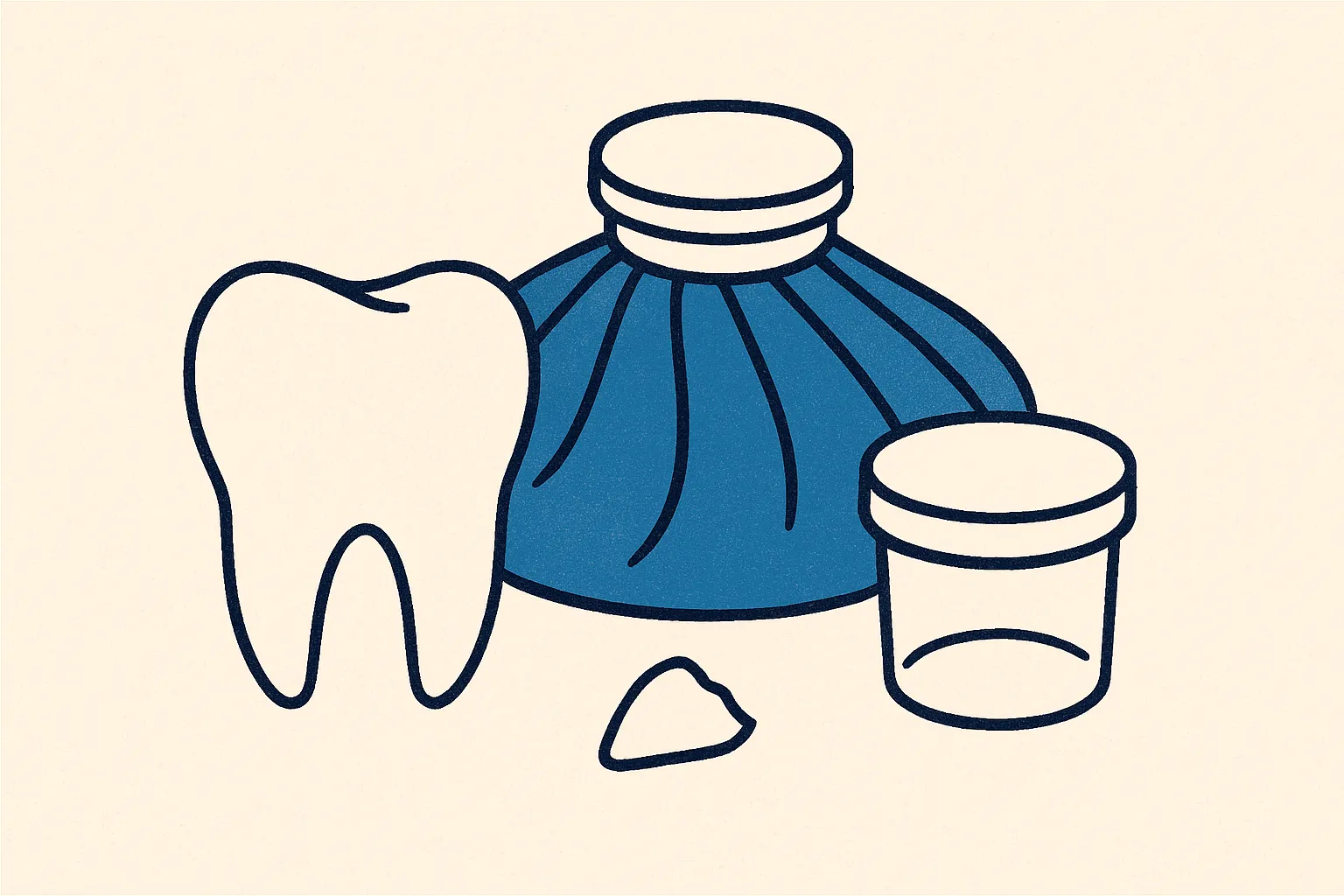
Save this parent-friendly checklist for the moment a snack, sidewalk, or surprise elbow turns into a chipped tooth.
Your kid chipped a tooth. Take a breath, check for serious injuries, gently rinse the mouth, save any tooth fragment, use a cold compress, and call a dentist. Most importantly, know the difference between a chip and a knocked-out tooth, because a knocked-out tooth needs urgent care right away.
Wash your hands, help your child sit still, and look for bleeding, swelling, or other injuries to the lips, tongue, jaw, or face. A chipped tooth may look dramatic, but the first priority is making sure your child is otherwise safe.
If the mouth is bleeding, place clean gauze over the area and apply gentle, steady pressure. Do not repeatedly lift the gauze to check, since that can disturb clotting.
Seek urgent dental or emergency care right away for any of these signs:
A chipped tooth is still in the mouth with a piece missing. A knocked-out tooth, also called an avulsed tooth, has come completely out of its socket.
Have your child gently rinse with plain water to clear away blood or crumbs. Skip aggressive swishing, especially if the area is sore.
Look for the missing piece of tooth. Check the floor, clothing, food, cup, or sports equipment involved in the accident. If you find the fragment, pick it up carefully and place it in a clean container with milk or saline. Do not scrub it, disinfect it, or wrap it in a dry tissue.
A dentist may want to examine the fragment and, in some situations, may be able to use it during repair. Even if it looks tiny, bring it along.
Do not use household glue, nail glue, craft glue, or a do-it-yourself repair kit. Teeth and superglue are not a buddy comedy anyone asked for.
Place a cold compress against the outside of the cheek or lip near the injury. Wrap ice or a cold pack in a thin towel first, since direct ice can irritate the skin.
Use light pressure rather than pushing firmly against the injured area. The cold may help with temporary discomfort and swelling while you arrange dental care.
If a sharp tooth edge is rubbing the cheek or tongue, discourage your child from poking it. Dental wax may provide a short temporary barrier if you already have it, but it does not replace an examination.
Offer water and keep your child from biting with the injured tooth. Soft, cool foods may be more comfortable until a dentist checks the damage. Avoid crunchy, sticky, very hot, or very cold foods if they trigger pain.
For pain medicine, follow the product label and guidance from your child's pediatrician or dentist. Age, weight, health conditions, allergies, and other medicines all matter. Never place aspirin directly on a tooth or gum, since it can injure the tissue.
Avoid numbing gels unless a health professional recommends one for your child. Numb lips and cheeks can also be easier to bite accidentally.
When you call, share:
A dentist can tell you how quickly the tooth should be examined based on those details. A large chip, strong pain, a loose tooth, visible pink or red tissue, or a changed bite generally deserves prompt attention. Even a small painless chip should be checked, since cracks or damage below the visible surface are not always obvious at home.
The appearance can offer clues, but it cannot confirm the depth of an injury without an examination.
Do not probe the chipped area to figure out which layer you see. A photo taken in good light can be helpful when speaking with the dental office.
If you are unsure which kind of tooth was injured, call a dentist rather than guessing based only on age. Children lose teeth on different schedules.
A chipped baby tooth still deserves evaluation. The dentist will consider comfort, the remaining tooth structure, the child's bite, and the permanent tooth developing underneath.
If a baby tooth is completely knocked out, do not try to put it back into the socket. Doing so could harm the developing permanent tooth.
If a permanent tooth is completely knocked out, seek urgent dental care right away. Hold the tooth by the white chewing end, not the root. Do not scrub it. Keep it moist in milk or a tooth preservation solution, and do not place it loose in a young child's mouth because of the choking risk.
The dentist may examine the tooth, check the bite, and take an X-ray if needed. Treatment depends on whether the tooth is a baby tooth or permanent tooth, how much structure is missing, and whether the nerve area has been affected.
Possible approaches include smoothing a tiny rough edge, repairing the area with tooth-colored bonding, protecting the tooth with a crown, or referring for additional care. A crown is a cap that covers and protects a tooth.
For suitable permanent teeth that need more coverage, Dental Spot offers a same-day crown visit, with scanning, design, milling, and seating completed in one appointment. A crown is not right for every chip or every child, so the dentist will recommend an option based on the individual tooth. You can also explore the practice's broader dental services.
Dental injuries can change over time. Contact the dentist if your child develops increasing pain, swelling, fever, a pimple-like bump on the gum, new sensitivity, tooth darkening, or a bite that suddenly feels different.
Follow the dentist's advice about eating, brushing, sports, and follow-up visits. Gentle brushing is usually important for keeping the area clean, but the injured tooth may need extra care.
Dental Spot welcomes families in Farmington Hills on Monday, Wednesday, and Friday, with Lathrup Village appointments on Tuesdays. Book a visit so Dr. Nahla Wadie, Dr. Elie Sassine, and the team can evaluate the tooth and discuss appropriate next steps. Most PPO plans are accepted.
This article is for general education and is not dental or medical advice. For personal concerns, see a dentist.