Treatments
Your Dental Crown Has a Clock: What Helps It Last and What Makes It Quit Early
• • 6 min read
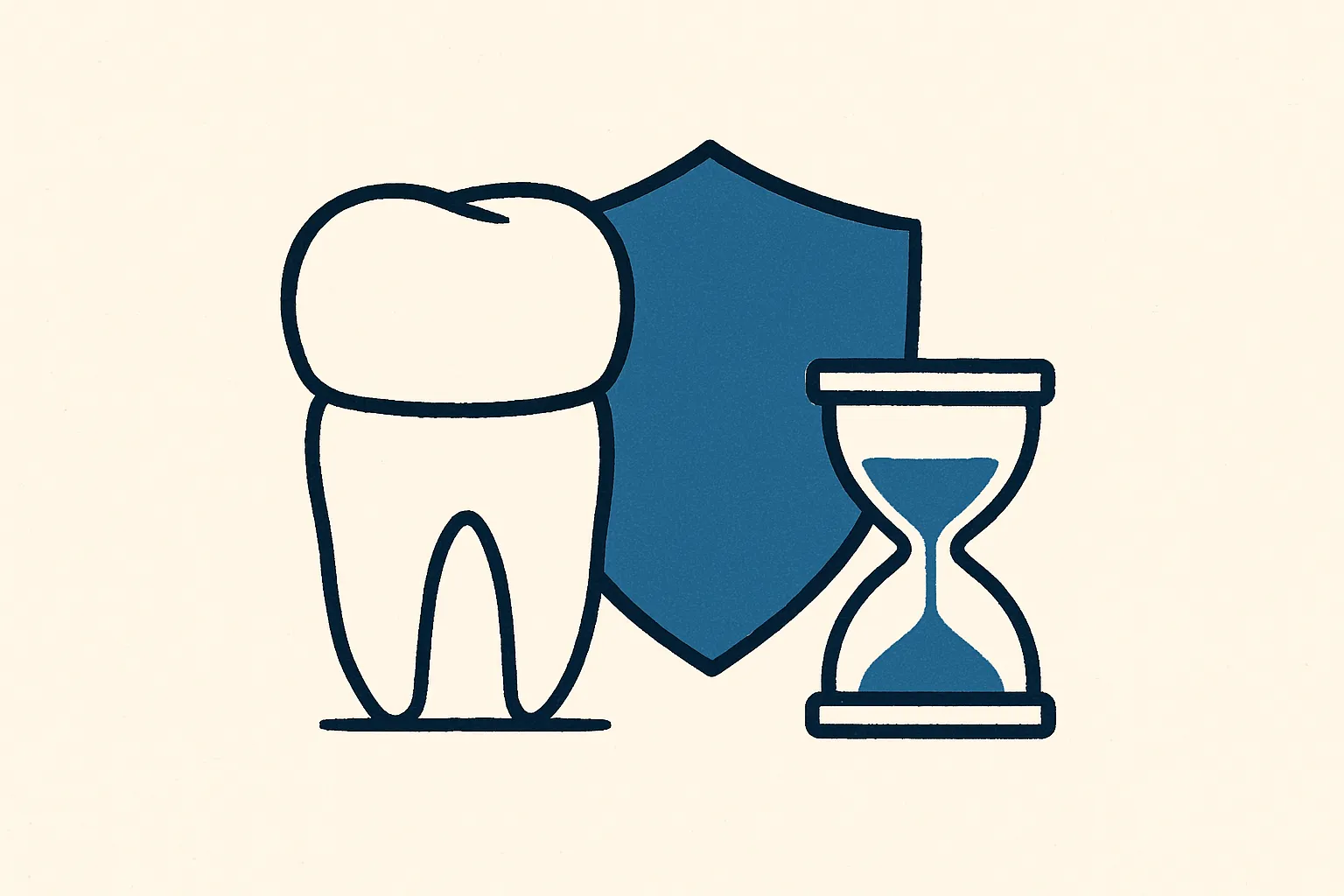
A crown has no fixed expiration date, but its fit, foundation, bite, and daily workload can move the clock.
A dental crown commonly lasts about 10 to 15 years, though some need replacement sooner and others remain healthy for decades. There is no stamped expiration date. The biggest influences are the tooth underneath, the crown's fit, your bite, and what happens to it every day.
A crown is a custom cover that restores and protects a damaged tooth. It may be recommended when a tooth has a large filling, significant wear, a crack, or another reason it needs more support.
How long that crown lasts depends on more than the material. A beautifully made crown still relies on the health and strength of the tooth beneath it. Think of the crown as a very good roof. The roof matters, but so do the walls, foundation, weather, and maintenance.
Some crowns last less than 10 years because of decay, fractures, heavy bite forces, or changes in the supporting tooth. Others pass the 15 year mark with healthy margins and no reason to replace them. Dentists generally replace crowns because there is a clinical problem, not simply because a birthday arrived.
There is no universal ranking because every mouth has a different bite, diet, and dental history. Still, these are the factors dentists watch most closely.
The crown itself cannot get a cavity, but the natural tooth underneath it can. Bacteria may collect where the crown meets the tooth, especially when plaque stays along the gumline or the edge becomes difficult to clean.
That meeting point is called the margin, which simply means the border where the crown and tooth come together.
Decay near a margin can weaken the crown's support and may remain hard to notice without an exam. This is one reason routine dental visits still matter after a tooth receives a crown.
Clenching and grinding can place repeated pressure on crowns and natural teeth. The dental term is bruxism, meaning you squeeze or rub your teeth together, often during sleep.
Over time, that pressure can chip ceramic, loosen a crown, wear down the biting surface, or contribute to a fracture in the tooth underneath. A dentist can evaluate wear patterns and discuss whether a protective appliance is appropriate for an individual patient.
Ice, popcorn kernels, hard candy, pens, and fingernails can create concentrated force on one small area. Even a strong crown is not designed to be a bottle opener or an ice crusher.
One unlucky bite may cause a chip or crack. Repeated habits can also create small stresses that build over time.
A crown depends on the remaining tooth structure for support. If that tooth develops decay, a fracture, or a problem involving the nerve, the crown may need to be removed or replaced so the underlying issue can be addressed.
Gum recession can also expose part of the tooth or crown edge. That does not automatically mean failure, but it may affect sensitivity, appearance, or cleanability.
A crown that receives more force than intended may become sore, chipped, worn, or loose. Bite forces can also change as teeth shift, dental work is completed elsewhere, or natural teeth wear down.
A dentist checks how the upper and lower teeth meet when placing a crown. Follow-up evaluation may be useful if the bite later feels uneven or the crowned tooth seems to hit first.
Dental cement is the material used to secure many crowns to teeth. It can weaken over time, particularly when other risk factors are present.
Crown materials also behave differently. Ceramic offers a natural appearance, while certain ceramics are selected for added strength. Material choice depends on the tooth's location, available space, appearance goals, bite forces, and the condition of the tooth. No single material is best for every mouth.
A failing crown does not always fall out during dinner. Sometimes the first clue is subtle sensitivity, a rough edge, food catching in a new spot, gum irritation, or a bite that suddenly feels different.
Other crowns stay firmly attached while decay develops underneath. Regular exams allow a dentist to inspect the margins, evaluate the bite, and use dental imaging when appropriate.
A loose crown, persistent discomfort, swelling, a visible crack, or a bad taste around one tooth deserves a dental evaluation. These signs have several possible causes, so an examination is needed rather than guesswork at home.
Not simply because it was made in one visit. A same-day crown is digitally scanned, designed, milled, and seated without a temporary crown or a separate delivery appointment. Fabrication speed alone does not decide longevity.
Fit, material selection, tooth preparation, bite forces, bonding, and home care are the bigger parts of the story. Some cases are well suited to digital same-day treatment, while others may call for a different approach. You can learn how Dental Spot's same-day crown visit works, including the scan, design, milling, and seating process.
There is no secret crown spa treatment. The habits that support crowns are the same basics that support natural teeth and gums:
A crown does not make its tooth maintenance free. It gives the tooth coverage and support, while daily care helps protect the vulnerable border where crown meets tooth.
Schedule a dental evaluation if the crown moves, breaks, feels high when biting, or develops ongoing discomfort. Prompt attention may provide more options, although the right treatment depends on what an examination finds.
Seek urgent dental or emergency care right away for severe swelling, trouble breathing or swallowing, uncontrolled bleeding, or a knocked-out tooth. Those situations should not wait for a routine appointment.
Wondering how an older crown is holding up, or whether a damaged tooth may need one? Explore what Dental Spot offers, then book a visit with our team in Farmington Hills on Mon/Wed/Fri or Lathrup Village on Tuesdays. We will look at the whole picture, not just the number of candles on your crown's imaginary birthday cake.
This article is for general education and is not dental or medical advice. For personal concerns, see a dentist.