Myth Busting
The Wellness Plot Twist: 5 'Healthy' Habits That Can Quietly Wear Down Enamel
• • 5 min read
Your wellness routine may be giving your enamel a surprisingly hard time, but a few simple changes can help.
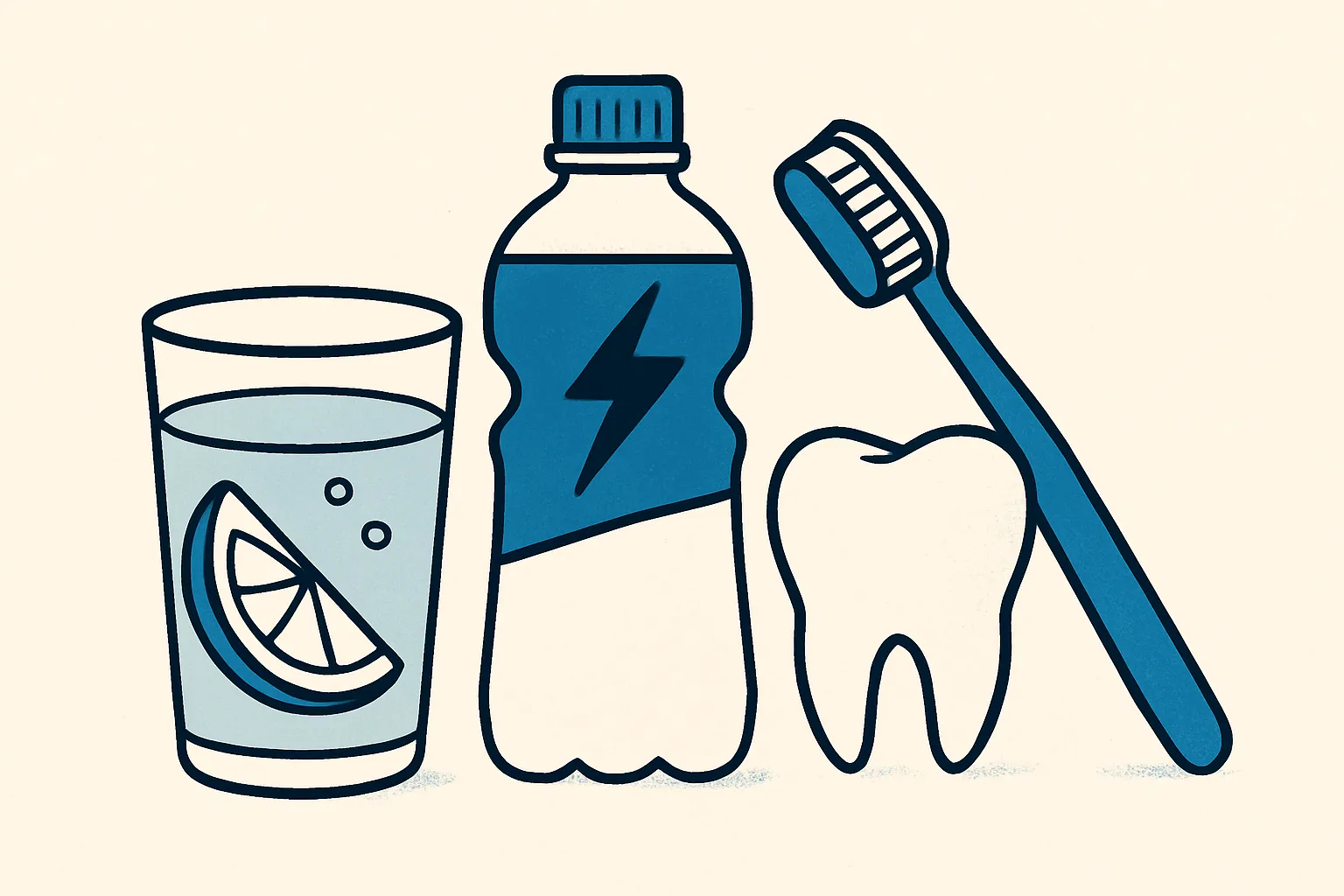
Some healthy habits come with an unexpected side effect: they expose teeth to acid or abrasion more often than enamel would prefer. Lemon water, electrolyte drinks, constant snacking and enthusiastic brushing can all contribute to wear, especially when they happen repeatedly throughout the day.
The good news is that you usually do not need to abandon the habit. You may just need to make it a little more tooth-friendly.
Enamel erosion means acids gradually dissolve the hard outer surface of a tooth. Once enamel is physically lost, the body cannot grow it back, although saliva and fluoride can help strengthen areas in the earliest stages of weakening.
A squeeze of lemon can make water more interesting, and staying hydrated is absolutely a win. The enamel problem is not one lemon slice floating peacefully in a glass. It is the repeated acid exposure from sipping that glass for hours.
Every acidic sip lowers the pH around your teeth. Saliva then works to bring the mouth back toward neutral. If another sip arrives every few minutes, saliva never gets much of a break.
Apple cider vinegar drinks and concentrated wellness shots can create a similar issue. Diluting them may reduce acidity, but it does not necessarily make them neutral.
A gentler approach is to enjoy acidic drinks within a shorter period, preferably with a meal, rather than carrying them around all day. Follow with plain water, and avoid swishing acidic drinks around your mouth. A straw may also reduce contact with the front teeth, although it does not remove the acid entirely.
Brushing after breakfast sounds impressively responsible. If breakfast included citrus, fruit juice, coffee, kombucha or another acidic item, however, immediate brushing can rub against enamel while its surface is temporarily softened.
This is where two good intentions collide. Acid starts the chemical wear, then vigorous brushing adds physical wear.
Many dental professionals recommend waiting about 30 to 60 minutes after acidic foods or drinks before brushing. Plain water can help rinse the mouth while saliva does its job. Another practical option is brushing before breakfast, then rinsing with water afterward.
This does not mean skipping your regular brushing routine. It simply means giving acid-softened enamel a little breathing room first.
Electrolyte drinks can be useful in specific situations, such as prolonged vigorous exercise or when a medical professional recommends them. But they are not automatically tooth-friendly just because the bottle features mountains, lightning bolts or an extremely fit person.
Many sports drinks are acidic, and some also contain sugar. Sugar-free versions can still contain acids for flavor and preservation, so the absence of sugar does not always mean the absence of enamel risk.
The sneakiest habit is slow sipping. Drinking one over several hours creates repeated acid exposure, similar to lemon water. For ordinary desk hydration or a short workout, plain water is usually the simpler choice. If you do have a sports drink, consuming it in a shorter window and following with water is kinder to enamel than nursing it all afternoon.
Dried fruit has fiber and nutrients, but it is also concentrated and sticky. Small pieces can cling in the grooves of teeth, giving mouth bacteria more time with the carbohydrates.
Those bacteria produce acids as they process sugars. Frequent grazing means more acid episodes, even when the snack has a wholesome reputation.
Whole fruit is often less clingy and brings more water to the party. Nuts, cheese and plain yogurt may also be less sticky snack options for many people, depending on dietary needs. The bigger enamel lesson is frequency: teeth generally cope better with defined meals and snacks than with constant nibbling from morning to night.
You do not need to fear fruit. Just remember that natural sugar is still something mouth bacteria can use.
Plaque is soft. It does not require the cleaning energy of a kitchen grout project.
Hard-bristled brushes, heavy pressure and aggressive scrubbing can contribute to wear near the gumline and may irritate the gums. Abrasive powders, including some charcoal products, can add even more friction. Using them right after acidic food or drinks can be especially rough on softened tooth surfaces.
Dental abrasion means tooth structure is worn away by repeated physical rubbing.
A soft-bristled toothbrush, fluoride toothpaste and gentle pressure are the usual enamel-friendly combination. Brush for two minutes, twice a day, and let technique do the work. Some electric toothbrushes have pressure sensors that alert you when enthusiasm has become a little too enthusiastic.
Enamel wear often happens gradually. Possible signs include increasing sensitivity, smoother or more transparent edges, small scooped areas on chewing surfaces, or teeth appearing more yellow as the layer beneath enamel becomes easier to see.
Those signs can have several causes, so an online checklist cannot tell you what is happening in your mouth. A dentist can examine the pattern, review your habits and discuss options based on your individual needs.
If a tooth has already lost substantial structure, restorative care may sometimes be considered. You can explore Dental Spot's services, including the same-day crown visit, where an appropriate crown can be scanned, designed, milled and seated in one appointment. Whether a crown or any other restoration is suitable requires an in-person evaluation.
For a knocked-out tooth, severe swelling or uncontrolled bleeding, seek urgent dental or emergency care right away.
Enamel generally prefers fewer acid exposures, plenty of plain water, gentle brushing and regular fluoride use. The goal is not perfect eating or a joyless beverage life. It is giving your teeth enough quiet time between acidic moments.
Concerned about sensitivity or enamel wear? Book a visit with Dental Spot in Farmington Hills on Mon/Wed/Fri or Lathrup Village on Tuesdays. Dr. Nahla Wadie and Dr. Elie Sassine can help you sort out what is harmless, what deserves attention and which changes make sense for you. Most PPO plans are accepted.
This article is for general education and is not dental or medical advice. For personal concerns, see a dentist.