Myth Busting
Does Charcoal Toothpaste Whiten, or Just Create Drama?
• • 5 min read
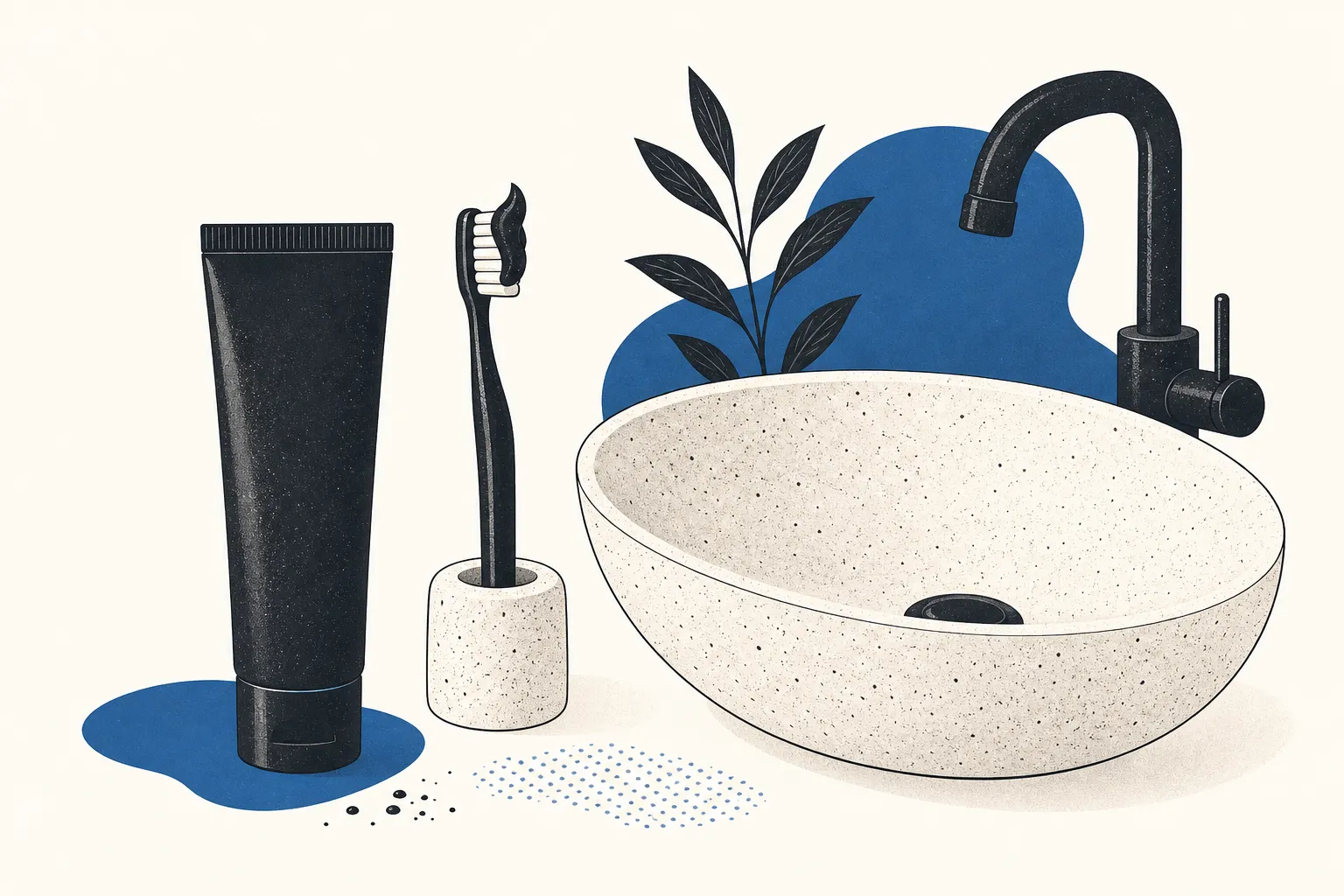
Before you turn your bathroom sink into a tiny coal mine, here is what charcoal toothpaste can and cannot do.
Short answer: charcoal toothpaste may remove a little surface staining, but it does not truly bleach teeth or change their natural color. The dramatic black foam is doing more for the bathroom aesthetic than the whitening science.
Some charcoal toothpastes are also abrasive, so frequent use can trade temporary polish for sensitivity or enamel wear. That is not the glow-up anyone ordered.
Activated charcoal is a fine, porous powder made from carbon-rich materials. In other settings, it can trap certain substances on its surface, a process called adsorption.
That sounds impressive, but toothpaste spends only a short time on your teeth before being rinsed away. There is limited evidence that charcoal provides a meaningful whitening benefit beyond the stain removal that an ordinary toothpaste may offer.
The key distinction is between two kinds of discoloration:
Charcoal toothpaste may polish away some extrinsic stain. It cannot reach inside a tooth and lighten intrinsic discoloration. Actual bleaching products use ingredients such as hydrogen peroxide or carbamide peroxide to change color within the tooth structure.
Three things may create the impression of instant whitening.
First, black paste creates an intense visual contrast. Once it is rinsed away, your teeth may seem brighter simply because they were surrounded by dark foam a moment earlier.
Second, abrasive particles may scrub off a thin layer of surface buildup or stain. That can make teeth look cleaner, especially if staining was already present.
Third, a freshly brushed mouth feels smooth and minty. Our brains are very willing to translate clean into white, even when the actual tooth shade has barely changed.
None of this means the product did nothing. It means polishing and bleaching are not the same job.
The concern is not that every charcoal toothpaste automatically harms teeth. The concern is that formulas vary, and some may be more abrasive than you realize.
Enamel is the hard outer covering of a tooth. It does not grow back after it is worn away. Under enamel is dentin, a softer and naturally more yellow layer that can also be more sensitive.
Overly aggressive brushing with an abrasive paste may gradually wear the surface, particularly near the gumline. Ironically, thinning enamel can make teeth appear more yellow because more dentin shows through.
A few other things deserve attention:
If a toothpaste causes new sensitivity, gum irritation or persistent discomfort, stop using it and ask a dentist for personal guidance.
A sensible everyday toothpaste does not need a trendy ingredient or an influencer lighting setup. Look for the basics first.
Even a reasonably formulated charcoal toothpaste is not a substitute for routine dental care or professional cleaning.
People with sensitive teeth, exposed roots, gum recession or noticeable enamel wear may find abrasive products uncomfortable. A dentist can help identify a toothpaste that fits those concerns.
Charcoal also will not whiten crowns, veneers, fillings, implants or dentures. Dental restorations keep their existing shade, while natural teeth may respond differently to whitening. That mismatch is one reason it helps to discuss whitening before changing your routine.
If your smile includes visible restorations, personalized advice can prevent an accidental checkerboard effect.
For mild surface stains, consistent brushing with fluoride toothpaste, flossing and professional cleanings may make a noticeable cosmetic difference. Reducing frequent exposure to staining drinks can also help, although nobody is asking you to break up with coffee by sunset.
For a change in tooth shade, peroxide-based whitening has much stronger evidence than charcoal. The best method depends on your teeth, gums, sensitivity, restorations and the cause of discoloration.
A dental exam can also catch cavities, cracks or gum irritation before whitening begins. Explore professional teeth whitening options or review what Dental Spot offers before choosing a product based entirely on packaging confidence.
If your charcoal experiment has produced more gray splatter than sparkle, bring the tube or a photo of its ingredient list to your next visit. Dr. Nahla Wadie can look at your enamel, existing dental work and type of discoloration before discussing appropriate options.
Dental Spot is located at 31487 Northwestern Hwy, Suite B, Farmington Hills, MI 48334. The office is open Monday, Wednesday and Friday from 8 AM to 6 PM, which can help neighbors from West Bloomfield fit a visit around work, school or winter driving.
If a separate tooth problem turns out to need a crown, same-day crowns are scanned, designed, milled and seated in one visit. That service repairs a tooth rather than whitening it, and the crown's shade is selected as part of the restoration process. Most PPO plans are accepted. You can book a visit to discuss stains, sensitivity or whitening questions with Dr. Wadie.
Does charcoal toothpaste really whiten teeth? It may polish away some surface stain, but it does not bleach teeth or reliably change their natural shade.
Can charcoal toothpaste wear down enamel? Some formulas may be abrasive, especially when paired with hard brushing. Enamel loss cannot be reversed, so ongoing sensitivity or irritation deserves a dental evaluation.
Can I ask a dentist in Farmington Hills about whitening? Yes. Dental Spot offers cosmetic dental services, and Dr. Nahla Wadie can discuss whether discoloration is on the surface, within the tooth or related to existing dental work.
This article is for general education and is not dental or medical advice. For personal concerns, see a dentist.